Members of staff at ACULCO were forced to close the building and call the police in Calle Albendiego in Madrid , after violence broke out between two men fighting in the extensive queue on Tuesday 21st April.
Despite working past the scheduled hours to assist people who are seeking to claim regularisation after the decree by Pedro Sanchez´s government, the violence meant the doors were shut with a member of staff informing those waiting the police had been called.
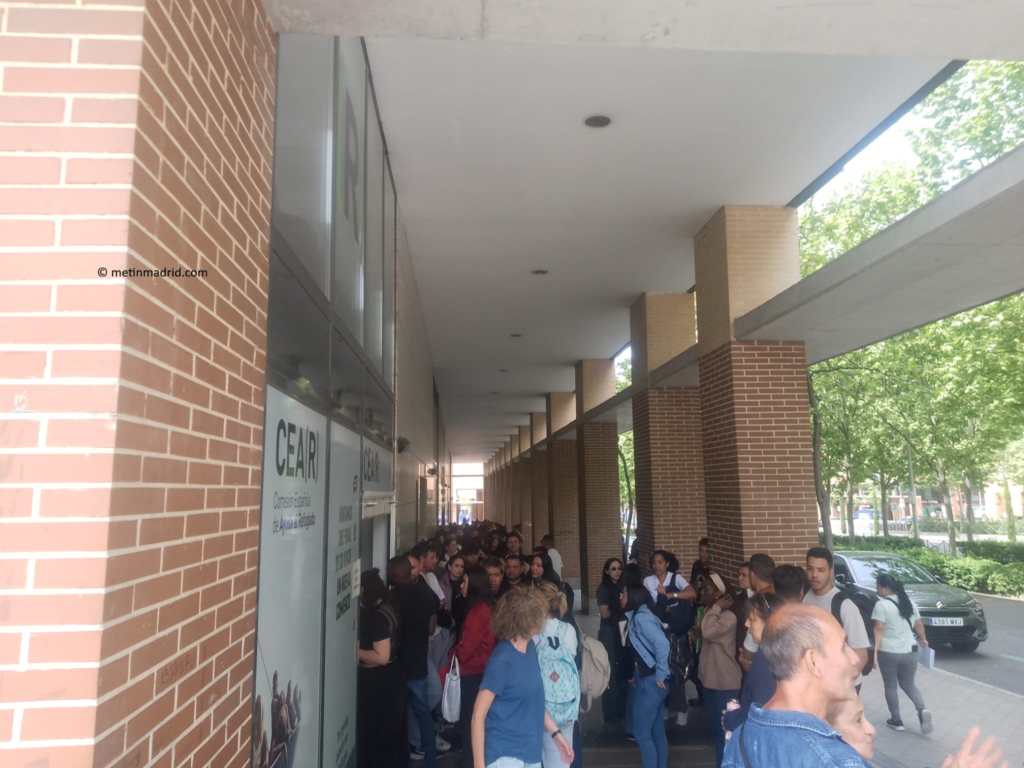
Twenty five minutes later, three police cars and six officers arrived to disperse the crowd still waiting. A few minutes walk away on Avenida.Asturias, the queue at CEAR (Comisión Española se Ayuda al Rufugiado) stretched down the street with people waiting hours in the hope of getting the legal right to reside in Spain. Other offices across Spain have seen people sleeping outside to maintain their space in line.
The end of a welfare state?
There has been deep opposition within Spain from both politicians and within the general public on the decision to permit the regularisation of what was initially predicted to be half a million people but is on course to be more. The crucial question now is whether Spain´s and especially its major cities of Madrid and Barcelona can absorb that many people into their already creaking public services. Once legal, those regularised will have access to public services of health and housing assistance (housing already a crisis within Spain).
Fundamentally, this is a breaking of the basis that a national welfare state exists on and is likely to erode support in future years for people continuing to support or believe in such a system. Already Vox is the largest party amoungst 18-24 year old voters in the latest DB40 barometer and with progressive politicians attacking the very idea of national citizen preference, it is increasingly unlikely to see how a system that prioritises immigrants who did not legally enter the country, whilst trading the language of contribution for rights, is one that can survive.