

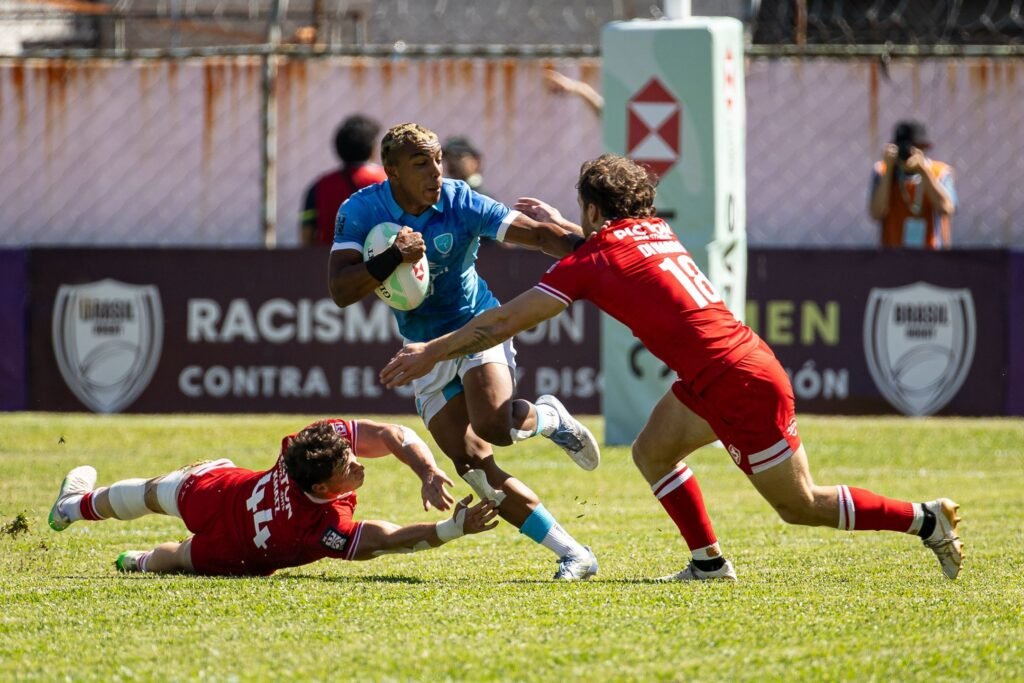
A stunning winning performance at their home SVNS2 tournament in Brazil gives their Women´s 7´s a ticket to the HSBC SVNS World Championship. Whilst Uruguay´s 7´s team also snatched the final male qualification spot away from Belgium after a third place finish in Brazil.
After 6th and 5th place finishes in the previous two SVNS2 qualifiers for the World Championship, few would have given Brazil any hope. But a do or die final decider against Kenya and their subsequent victory means Brazil pipped Kenya´s women to the final spot by just two points.
CAMPEÃÃÃSSSSSS EM CASAAAAAAA!! 🔥🔥🔥🔥
YARAS CLASSIFICADAS E O TROFÉU NÃO SAI DAQUI!#BrasilRugby #JogueComoUmaYara #OneAllSportsXBrazilRugby pic.twitter.com/6ciD73nVlw
— Brasil Rugby (@brasilrugby) March 29, 2026
Meanwhile, Spain´s women continued their impressive buildup to the HSBC SVNS World Championship with a third place finish.
In the Men´s section, a third place for Uruguay meant their men´s team would be competing on the SVNS World Championship circuit, doing just enough to see off Belgium, joining USA, Kenya and Germany on the Men´s side. For the Women: Argentina, Spain, South Africa and the afroementioned Brazil have booked their spots.
South American Sweep
With all 3 possible South American teams qualifying, it should give the event in Spain a great feel but these results also represent something of a shift in where Rugby Sevens as a product and future might be. The retreat of the home nations into GB (along with Ireland´s complete withdrawal) meant a GB team dead last in SVNS for both men and women and likely to be relegated. Their replacement? Argentina or Spain for the women are best bets with USA and Kenya on the men´s side. Only France (largely a byproduct of their hunt for an Olympic gold medal in Paris) remain amongst the established European nations.
🔜 𝐒𝐕𝐍𝐒 𝐖𝐎𝐑𝐋𝐃 𝐂𝐇𝐀𝐌𝐏𝐈𝐎𝐍𝐒𝐇𝐈𝐏#VamosTeros 🇺🇾 pic.twitter.com/KiNf6F59k8
— Teros 7’s (@Teros7s) March 29, 2026
A changing of the guard?
This represents a challenge to World Rugby on the continuing relevence of Sevens and also in terms of selling the events (stripped of venues and the audience that historically made Hong Kong 7´s such a success.) In short, can this make money (or at least not bleed so much money)? Crowds were considered low in the USA for SVNS and Uruguay for SVNS2 but Kenya did deliver. The pressure will be on Hong Kong and Spain to deliver some good crowds to show the current structure has legs.
On the playing front, the emergence of a player base in Kenya and across South America is only a boon to the sport. The question is can the emergence of new nations like Kenya and the South Americas create a suitable replacement for the European cartel and keep World Rugby´s gateway drug into the sport alive?
Featured image property of Bruno Ruas / World Rugby